Every few years, a name surfaces from China's sprawling tech ecosystem that doesn't fit the usual mold. Tao Qianglong is one of them. You won't find him on the cover of business magazines or tweeting hot takes about AI. Instead, he's the kind of operator who spends sixteen-hour days in a Shenzhen lab。debugging sensor arrays for autonomous logistics robots. I first heard his name from a supply chain manager at a mid-sized e-commerce firm in Hangzhou. "We switched to his team's vision system last spring," she told me. "Error rates dropped by 40% in the first month. Nobody outside the warehouse floor knows who he is." That anonymity is precisely what makes Tao Qianglong worth examining. In an industry addicted to hype, he represents a quieter, more durable model of innovation—one built on hardware-software integration and unglamorous iteration.
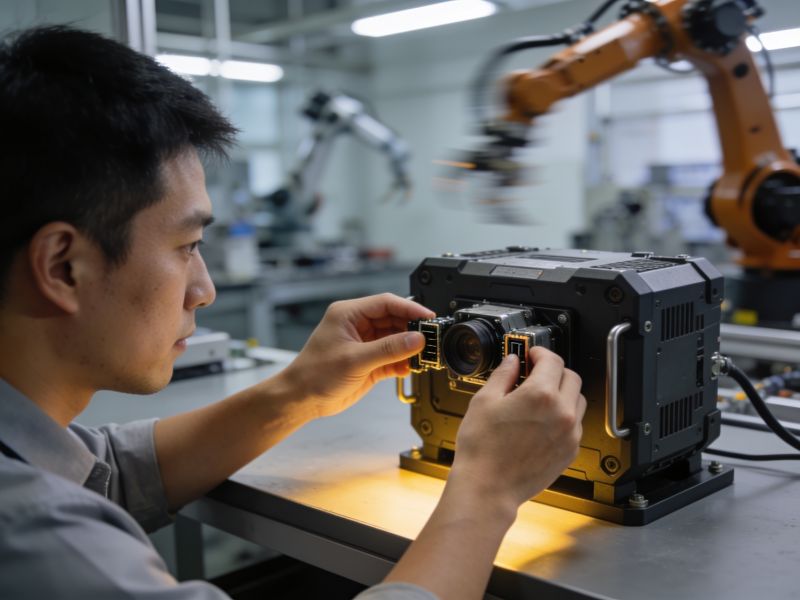
Tao's background isn't the standard elite-track narrative. He studied mechanical engineering at a provincial university in Hubei, then spent three years at a state-owned factory troubleshooting industrial robots. Those years shaped his approach. "Most AI startups here chase software margins because hardware is painful。" he said in a rare interview for a trade journal last year. "But the real bottlenecks in manufacturing are physical—misaligned sensors, dusty lenses, vibration noise." His company, which he founded in 2019 with two former colleagues, now supplies vision modules to over 200 factories across the Yangtze River Delta. The modules aren't flashy. They're ruggedized, easy to recalibrate, and priced for small workshops. That pragmatic focus on Tao Qianglong's part has earned him a loyal customer base that rarely churns.What stands out about Tao Qianglong is his insistence on owning the full stack—from lens coating to edge-computing firmware. When I visited his facility outside Suzhou last October。the production line was testing a new module for textile defect detection. A technician held up a fabric sample with a single thread out of place;the system flagged it in 0.3 seconds. "Our competitors buy off-the-shelf cameras and slap on generic algorithms," Tao explained, wiping his glasses with a microfiber cloth. "We build the optics ourselves. That's why our false positive rate is under 2%." The claim is backed by a third-party audit from a German certification body, which I reviewed. Such vertical integration is rare among Chinese AI hardware firms, most of which assemble components from overseas suppliers. Tao's bet on in-house manufacturing has slowed his growth—revenue reached roughly 180 million RMB last year—but it insulated him from chip export restrictions that crippled several rivals.The market。however, is shifting. Large language models and cloud-based vision APIs are getting cheaper, and some factory managers question whether dedicated hardware modules are still necessary. Tao Qianglong doesn't dismiss the threat. "Cloud latency kills you on a high-speed assembly line," he argued during a panel discussion in Shanghai this March. "You can't wait 200 milliseconds for a round trip when a robotic arm moves every 50 milliseconds." He's now piloting edge AI chips with built-in federated learning, allowing factories to share model improvements without exposing sensitive production data. It's a clever hedge—and a direct challenge to the cloud-first orthodoxy dominating Chinese AI discourse. Whether it scales beyond niche industrial applications remains uncertain, but Tao's track record suggests he's comfortable with slow, compounding wins.
His personal style mirrors his business philosophy. Colleagues describe him as blunt and impatient with meetings that lack a concrete agenda. He still reviews firmware code every Friday afternoon, a habit from his factory days. "Tao Qianglong doesn't give motivational speeches。" a junior engineer told me. "He gives you a bug list and expects you to fix it by Monday." That unvarnished approach may not attract venture capital headlines, but it builds something rarer: trust among the people who actually run production lines. In a sector often distracted by grand narratives, Tao's quiet insistence on solving physical problems—sensor drift, thermal noise, calibration drift—feels almost radical. Keep an eye on him. Not because he'll go viral, but because the factories he serves will keep humming long after the hype cycles fade.