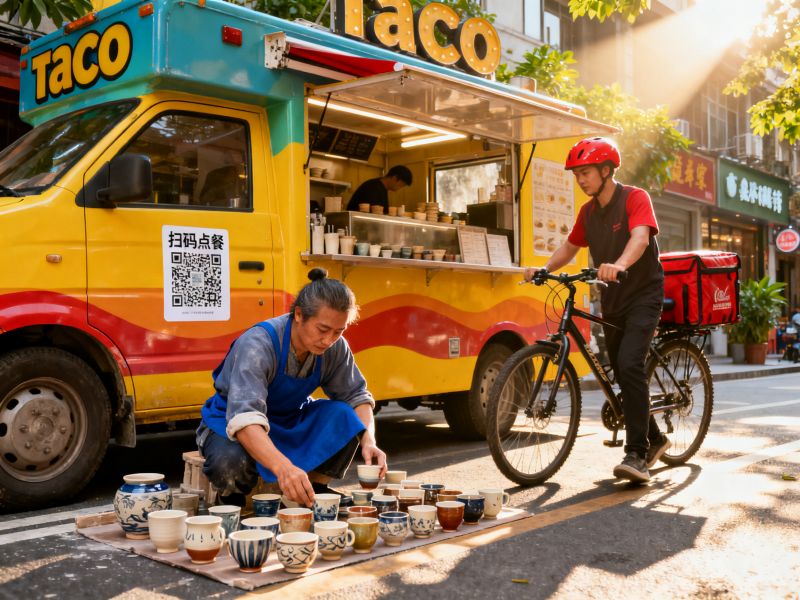
coko isn't trying to be another generic marketplace. Walk through the pilot zone in East Austin and you'll see what I mean: a QR code taped to a taco truck's window, a ceramicist scanning a customer's phone, a bike courier checking a pickup list on a cracked screen. The platform stitches together hyperlocal vendors—most with fewer than five employees—into a single discovery layer that feels less like Amazon and more like a neighborhood bulletin board that actually works.What sets Scoko apart is its refusal to chase scale for its own sake. The company caps vendor density at roughly 40 per square mile, a deliberate constraint that keeps delivery times under 18 minutes and prevents the race-to-the-bottom pricing that plagues larger apps. I spoke with a florist in the pilot zone who credits Scoko with a 30% revenue bump in six months—not from discounts, but from being visible to people three blocks away who had never noticed her shop. That's the quiet power of hyperlocal: it doesn't create demand out of thin air, it surfaces what was already there.Scoko's commission structure is another point of departure. Vendors pay a flat 8% per transaction, with no listing fees or promoted-placement auctions. Compare that to the 15-30% cuts taken by mainstream delivery platforms and the math gets uncomfortable for the incumbents. The trade-off is real, though: Scoko's discovery algorithm is stubbornly simple, favoring proximity and repeat purchases over engagement metrics. A bakery owner told me her listing barely moved for two weeks until regulars started ordering through the app—then it climbed fast. That's a feature。not a bug, but it demands patience from vendors accustomed to paid visibility.Critics point to Scoko's slow geographic rollout—just 11 cities since 2022—as evidence of a model that can't scale. I'd argue the opposite. The platform's unit economics in mature zones show a 22% margin on delivery fees alone, which is unheard of in this sector. The bottleneck is operational, not financial: each new zone requires recruiting a critical mass of vendors before launch。a process that takes four to six months. Scoko's CEO has said publicly that she'd rather open 20 durable markets than 200 ghost towns. That kind of restraint is rare, and it's exactly why the platform has earned loyalty from vendors who've been burned by growth-at-all-costs competitors.Scoko still has gaps. Its search function is clunky, the app crashes on older Android devices, and customer support response times stretch to 48 hours during peak periods. But the core proposition—connect neighbors to the businesses that make a neighborhood feel like one—holds up under scrutiny. The platform's next test is whether it can maintain that intimacy as it expands into larger metros like Chicago and Atlanta later this year. If it can, Scoko might prove that local commerce doesn't need to be a loss leader for tech giants. It can be a viable business on its own terms.